

Tinplate is thin, low-carbon steel sheet coated on both sides with a very thin layer of tin. It is also called tin-coated steel or simply tinplate.
How is it made?
Production starts by cold rolling a hot-rolled coil down to the required thickness. The sheet is then annealed and temper rolled for surface quality. Finally, it is coated with tin on an electrolytic tinning line. The tin layer is only microns thick and makes up a very small share of the sheet's weight.
What does the tin coating do?
- Corrosion resistance: tin protects the steel from moisture and air.
- Food compatibility: with a suitable lacquer, it is used safely in food packaging.
- Solderability and welding: it makes closing can seams easier.
- Printable surface: its bright surface holds lacquer and print well.
Applications
- Food cans
- Edible oil, paint and chemical tins
- Aerosol cans, closures and caps
- Decorative boxes and metal accessories
In what form is tinplate sold?
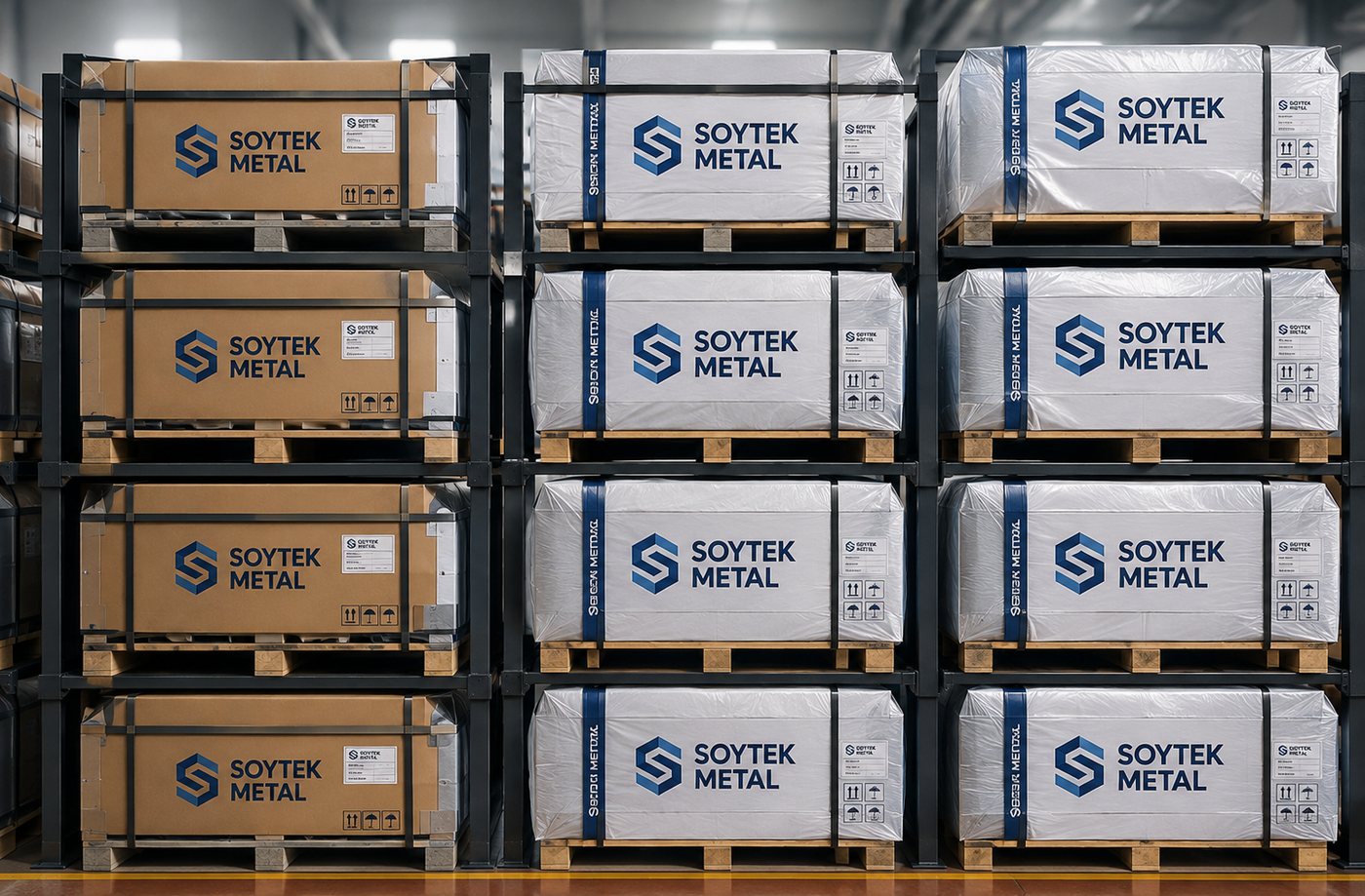
Tinplate is supplied as master coils, slit strip coils or cut-to-length sheet bundles. The right form depends on your production line: manufacturers with their own cutting line usually buy coils, while those who feed material straight into presses or printers prefer sheets.
At Soytek Metal we supply 0.15–0.50 mm tinplate and slit or cut it to your size. See our tinplate product page.